

 0
0
 0
0
You turn on the kitchen light for a midnight snack, and you see it. A dark, oily shape scuttling across the counter.
Your stomach drops. You grab a shoe or a paper towel, smash it, and flush it away. You breathe a sigh of relief, thinking the problem is solved.
Here is the uncomfortable truth: For every one cockroach you see in the light, there are likely dozens—or even hundreds—hiding in the dark.
Cockroaches are not just a nuisance; they are a health hazard. They carry Salmonella and E. coli, and their shedding skins are a leading trigger for asthma in children. If you have been fighting a losing battle with store-bought sprays and traps, it is not your fault. You are fighting biology with tools designed for temporary relief, not total elimination.
In this guide, we strip away the marketing fluff and explain exactly how cockroach pest control actually works, why DIY often fails, and how to reclaim your home permanently.
What is Professional Cockroach Control?
Cockroach pest control is a multi-step process known as Integrated Pest Management (IPM). Unlike DIY sprays that only kill visible insects, professionals use non-repellent baits and Insect Growth Regulators (IGRs). The bait attracts worker roaches, who carry the poison back to the nest, while IGRs sterilize the pests, preventing them from reproducing. This targets the entire colony, not just the individual.
The “Tip of the Iceberg” Reality
To defeat cockroaches, you have to understand their behavior. Roaches are thigmotactic, meaning they prefer tight spaces where their bodies touch surfaces on top and bottom. They love cracks, crevices, motor housings of refrigerators, and the voids behind your cabinets.
When you see a roach out in the open during the day or with the lights on, it usually signals one terrifying fact: The hiding spots are full.
The infestation has likely grown so large that the roaches are being pushed out of their nests to find space. At this stage, killing the one on the counter does nothing to stop the breeding machine hidden in your walls.
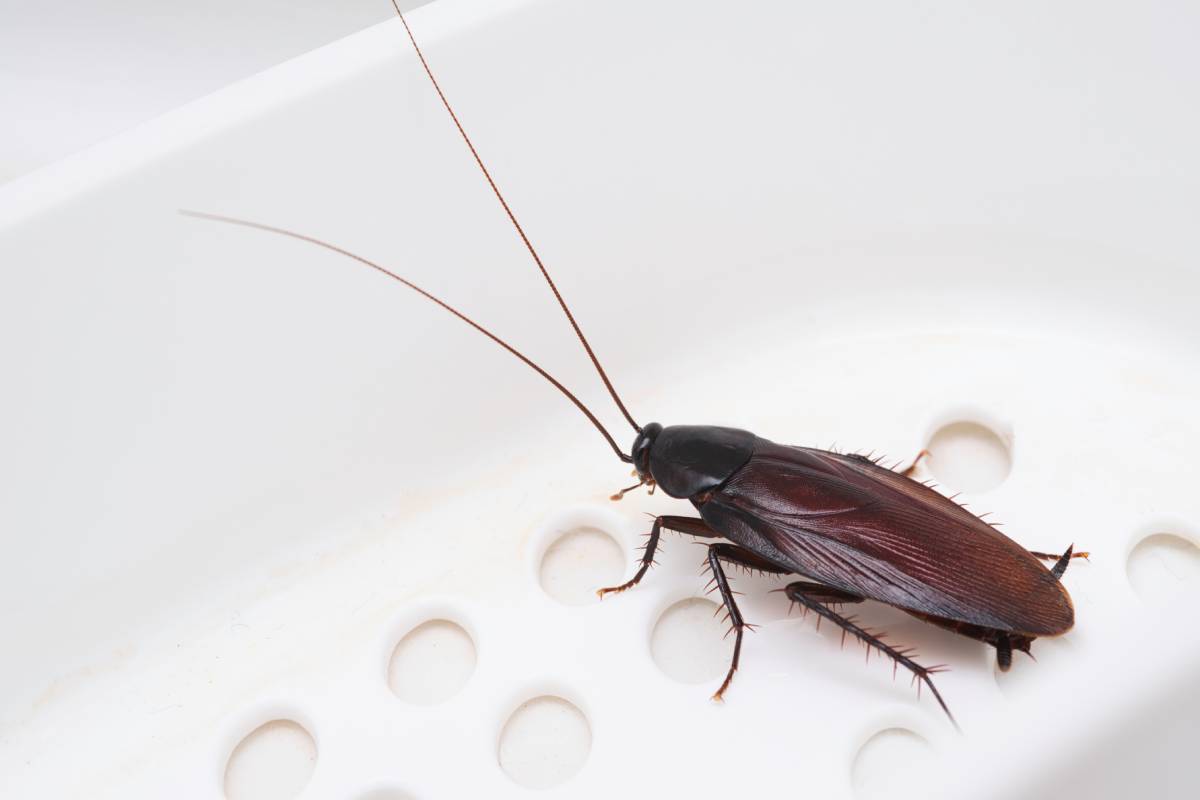
Why Store-Bought Sprays Can Make It Worse
This is the most common mistake we see homeowners make. You see a roach, you buy a can of “Roach Killer,” and you spray the baseboards.
Here is why that usually fails:
- Repellency Issues: Most over-the-counter sprays are repellents. They create a chemical barrier that roaches sense and avoid. When you spray the kitchen, you might not kill them; you might just push them into the bedrooms or the living room.
- The Egg Case (Ootheca): Female roaches carry their eggs in a hard protective case called an ootheca. Most sprays cannot penetrate this shell. You might kill the mother, but the 40 eggs inside her case survive and hatch two weeks later.
- Chemical Safety: Many homeowners underestimate the toxicity of these sprays. If you are handling potent chemicals, you must read the labels strictly and take care of your hands by wearing protective gloves to avoid skin absorption or burns.
- Resistance: The German Cockroach, the most common indoor species, reproduces so fast that they develop genetic resistance to common pesticides found in hardware stores.
Key Takeaway: You cannot spray your way out of an infestation. You have to outsmart them.
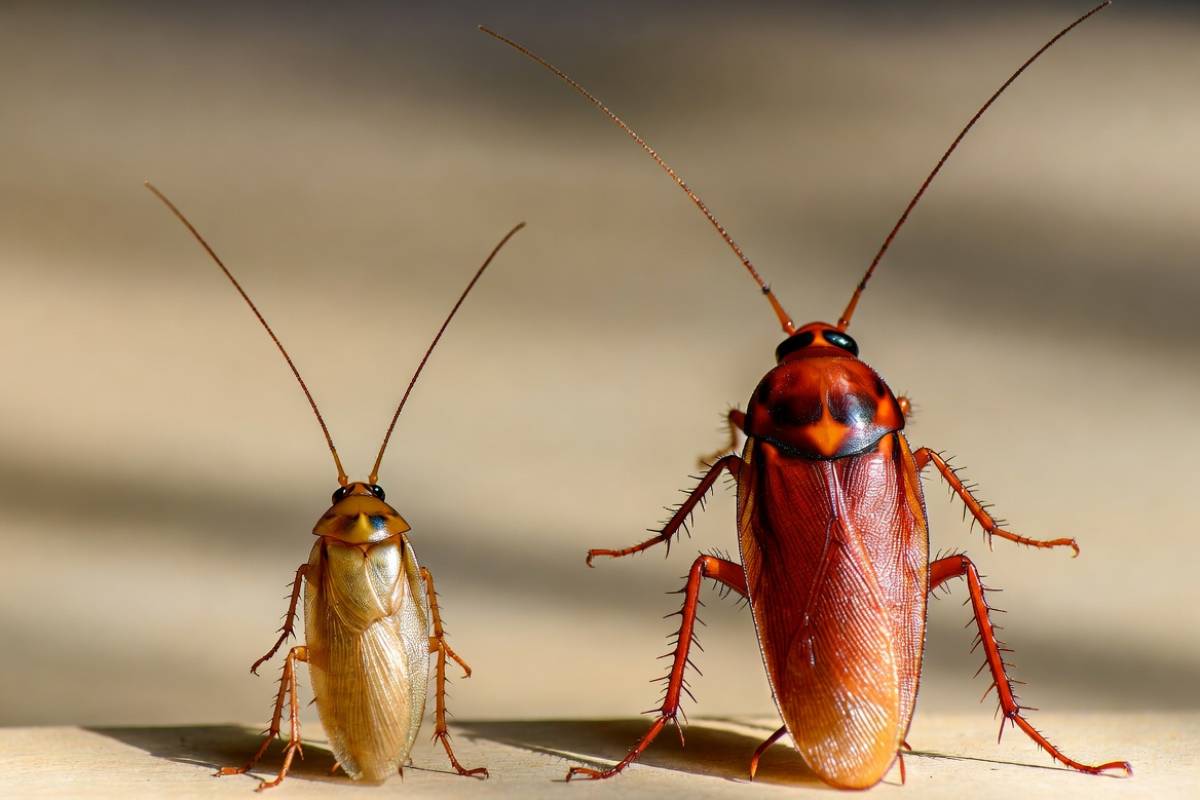
Know Your Enemy: German vs. American Roaches
Effective cockroach pest control starts with identification. Different species require entirely different treatments.
1. The German Cockroach
- Appearance: Small, light brown, with two dark racing stripes behind the head.
- Location: Kitchens and bathrooms. They need heat and moisture.
- Threat Level: Severe. They breed the fastest (one female can produce 30,000 descendants in a year). They do not live outside; if you have them, they are living inside your home.
2. The American Cockroach (Palmetto Bug)
- Appearance: Large, reddish-brown, capable of gliding/flying.
- Location: Drains, sewers, basements, and perimeter.
- Threat Level: Moderate. They usually live outdoors and wander in. Treating the perimeter of the home is usually effective.
The Professional Strategy: How We Kill the Nest
When you hire a world-class exterminator, we don’t just spray and pray. We use a three-pronged attack designed to collapse the colony from the inside out.
Phase 1: The Cleanout (The Flush)
If the infestation is severe, we may use a flushing agent to force roaches out of hiding spots to assess the population size. This is often done with a specialized vacuum (HEPA filter-equipped) to physically remove as many live adults and egg cases as possible immediately.
Phase 2: The Trojan Horse (Gel Baits)
We apply drops of highly attractive gel bait in cracks and hinges where roaches hide.
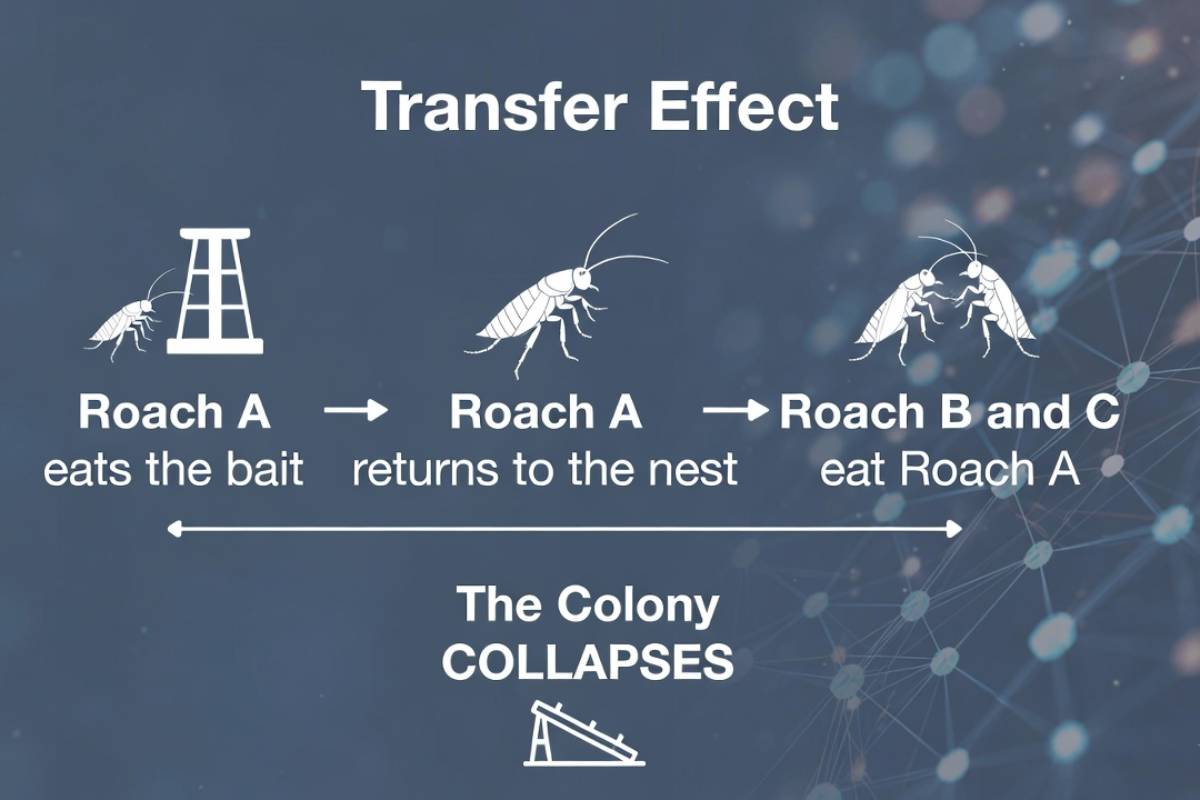
- How it works: The bait is palatable and non-repellent. The roach eats it but doesn’t die immediately.
- The Domino Effect: Roaches are coprophagic (they eat feces) and emetic (they eat vomit). The poisoned roach returns to the nest and dies. Other roaches eat the carcass or fluids, ingesting the poison second-hand. One poisoned roach can kill dozens of others.
Phase 3: Birth Control (IGRs)
This is the “secret weapon” most DIYers miss. We apply an Insect Growth Regulator (IGR).
- The Function: IGRs mimic insect hormones. They twist the molting process, meaning young roaches reach adulthood with twisted wings and—crucially—sterile reproductive organs.
- The Result: The current generation dies off naturally, and there is no next generation to replace them.
Prevention: How to Roach-Proof Your Home
Once the exterminators have done their job, you need to ensure the roaches don’t return. Sanitation is your primary defense.
Professionals across the cleaning industry agree that while surface cleaning is important for aesthetics, “deep sanitation” is critical for pest control. This means removing the invisible grease layers and crumbs that serve as a buffet for pests.
- Landscaping Buffers: While maintaining lush grass can be really good for business, curb appeal or home aesthetics, you must keep vegetation trimmed back from the foundation. American Roaches thrive in damp mulch and will use overhanging plants as a bridge to enter your property.
- Seal the Entry Points: Use caulk to seal gaps around pipes under sinks and behind toilets. In apartments, seal the gaps around common plumbing lines shared with neighbors.
- Eliminate Moisture: Roaches can live a month without food, but only a week without water. Fix leaky faucets and wipe down sinks before bed.
- Cardboard Management: Cockroaches love the glue in cardboard boxes. Break down delivery boxes immediately and take them outside. Do not use cardboard for long-term storage.
Conclusion: Take Back Your Kitchen
Living with cockroaches is stressful. It affects your sleep, your hygiene, and your peace of mind. But you do not have to live this way.
The difference between a recurring nightmare and a pest-free home isn’t about buying a stronger spray—it’s about breaking the biological cycle of the colony.
If you have seen one roach, don’t wait for the army to appear.
Ready to evict your unwanted guests? If you are facing an infestation, SWAT Pest Control Brisbane.com.au is ready to deploy a customized cockroach control plan that actually works. Contact us today to reclaim your home.
FAQ: Common Questions About Roach Control
How long does it take to get rid of cockroaches?
For a moderate infestation, you will see a significant reduction within 7 to 10 days. However, total elimination of German Cockroaches can take 3 to 6 weeks. This timeline is necessary to allow egg cases to hatch and the nymphs to eat the bait.
Do I need to leave my house for treatment?
In most modern treatments using gel baits and IGRs, you do not need to leave your home. These products are applied discreetly in cracks and crevices. However, if a fogging or heavy liquid treatment is required for a severe cleanout, you may need to vacate for 2-4 hours.
Are the chemicals safe for my dog/cat?
Professional cockroach pest control prioritizes safety. Gel baits are placed in areas pets cannot reach (like behind cabinets or inside hinges). Always ask your technician for “pet-safe” protocols, but generally, once the product is dry or applied in inaccessible areas, it is safe.
Why do I see more roaches after treatment?
This is actually a good sign! It means the “flushing” agents are working, driving roaches out of their deep hiding spots, or the bait is making them disoriented. Do not spray them with Raid! Let them return to the nest to spread the bait.


